Eskom has warned us about load-shedding likely to be here for longer than we had anticipated and this is something we should be prepared for. A few things businesses are suffering due to load-shedding include but are not limited to spoilage of cold storage items, compromised [hysical security, and unhappy customers. Only businesses who make loadshedding work for them will gain a competitive edge, this will of course depend on what type of business you’re running.
Here are a few things you can invest in:
Power bank: this is one of the most affordable and sustainable ways to keep your devices charged/on, including smartphones and card machines. This means you can still keep marketing and communicating with prospective customers, as well as accept card payments for those who don’t carry cash.
Dongles and routers: an affordable and reliable option for mobile internet connection yet! You can connect multiple users at a time (e.g. your employees/digital marketing team), These devices use cellular data though, you can consult with your internet service provider to find out about affordable data costs.
Generator: this can be a big cost for some businesses, but buying one can be intimidating. However, we have a few ideas that might help! Just like most things, you don’t have to totally buy a new one. You can either buy a second-hand generator from online markets and other avenues, or you can ease one. Just make sure you do your research here so you can get value for your money, calculate the numbers first and see if it makes sense.
Other ways to stay ahead of the competition:
Give clients no excuses. Even though we’re all affected by load-shedding, no one really likes to hear “we can’t, we have load-shedding”. Give clients no reason to want to take business elsewhere but hurl their money at you!
Keep marketing so customers will never forget about you. You can do a month’s worth of work in just a few hours and schedule/automate. We wrote a full blog on this, take something from this:
A shocker: according to Trading Economics, 132 businesses filed for bankruptcy or were declared bankrupt in June 2021, down from 191 in May 2021. Additionally, given the high rates of unemployment in South Africa, our economy is far from rosy.
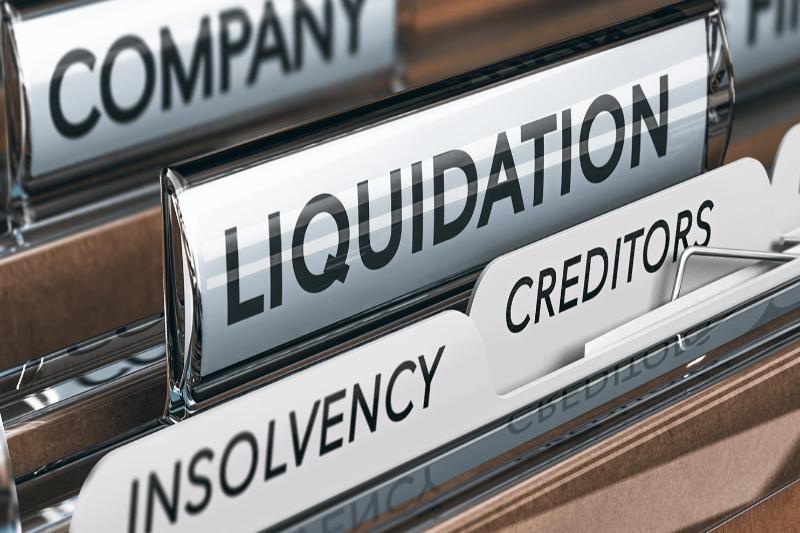
Note that a company does not need to have assets to be declared bankrupt. If the liabilities exceed its assets and it is unable to pay debts when these become due, the business must liquidate, according to the Companies Act. Liquidation is the process of bringing a business to an end and distributing its assets to claimants, which occurs when a company becomes insolvent (a financial state of affairs wherein the individual/business’s income is insufficient to pay its monthly expenses and debt). This is also known as “winding–up”.
Liquidation of a business/company, according to SARS may happen:
When a business/company is unable to pay its debts
As a result of a legal court process
By application of the creditors
Voluntary, i.e. applied for by members of a Close Corporation (CC)
When the business owner decides to do something different, or even perhaps retires for a well-earned rest.
There are two distinct types of insolvency: factual insolvency and commercial insolvency. When a company’s liabilities outweigh its assets, it is said to be in fact insolvent since it is unable to make payments on its debts when they become due. Even though the company has more assets than obligations, commercial insolvency happens when there is not enough cash on hand to fulfill the bills.
One of the benefits of being a shareholder is the protection limited liability provides. When a corporation is liquidated, the majority of the time the remaining debts are wiped off, and the shareholders are not held personally responsible for the firm’s debts. However, a court may rule that the directors and stockholders may be held personally accountable if it is discovered that the business was running when it actually should have filed for liquidation.
Apart from liquidation, another way is for a business to deregister. When a company voluntarily deregisters with the Companies and Intellectual Property Commission (CIPC), it implies the business/company is no longer registered and has no legal standing since it’s not doing any business nor has assets or liabilities.
Once a business/company receives confirmation from CIPC that they have been deregistered, the registered representative should visit their nearest SARS branch and make sure the business or company is deregistered for all the various types of tax.
“Every company must have a deliberate plan to prevent and detect fraud, and must never underestimate the potential of an attack from within.”
We couldn’t have found a better way to start off this article! Truth is, you never see it coming. Never think your employees will ever do that to you, especially since South Africa is a country with high crime rates. It’s good to trust your employees, however, do not be naive. As they say, our enemies are people around you, they know enough to hurt you, and in this case, your business.
According to the Global Economic Crime and Fraud Survey, 41% of economic crimes in South Africa were committed by employees, in comparison to the 36% of fraud committed by external sources and 21% was collusion between the two.
Understanding Fraud:
Let’s first unpack this, FRAUD is a common law offense – it is a wrongful or criminal deception intended to result in financial or personal gain.
To understand how to prevent your business from fraud, business leaders must first understand the types of fraud they’re most likely to encounter.
Types/Common Corporate Fraud(s)?
Payroll Fraud Schemes
Payroll fraud can appear in a variety of ways, particularly if a company manages its payroll function internally and is normally handled by a single person.
Types of payroll fraud:
“Ghost” employees – when a “trusted” employee manipulates the payroll process, in order to get an additional paycheque for a non-existent employee.
Falsified wages – when an employee or employees falsifies their wage rate or lies about their sales numbers for increased commission.
Expense and reimbursement fraud – when an employee logs a false reimbursement request or gets an expense claim approved for activities that did not receive the proper attention and valuation initially.
Asset Misappropriation and Skimming Fraud Schemes
The term “asset misappropriation” refers to a broad range of employee-based fraud schemes that fall into two broad categories: cash and noncash.
Types of asset misappropriation:
Cheque tampering – when an employee alters the amount, recipient, and other details on the cheque to transfer funds into their account instead of the original recipient.
Inventory theft – when an employee redirects deliveries of products from vendors to an alternate address – with the intention of keeping or reselling on the company’s dime.
Misuse of assets: When an employee utilizes company property, such as company vehicles, company computers, or company credit cards for unauthorized personal activities.
Financial Statement Fraud Schemes
Financial fraud occurs when a worker purposefully lies or omits crucial financial data—such as sales, revenues, assets, and liabilities—in order to deceive others.
Financial statement fraud red flags to look out for:
Accounting anomalies – when an employee falsifies the company’s revenue numbers to indicate increased income generated by the sale of products or services.
Falsified growth reports – when employees, managers, or executives, intentionally, misrepresent the company’s sales figures and financial growth in order for the company earnings to look healthier.
Falsify the value of an asset: Then is when an employee, manager, or executive purposefully alters the value of an asset to make it appear more valuable than it actually is.
There is no distinction between corporate or business fraud. Under common law, a case of fraud must be supported by the evidence of the following factors:
Misrepresentation.
Unlawfulness.
Actual or potential prejudice.
Intention.
When should you take action?
An employer must act as soon as any severe allegations of wrongdoing are known or suspected to exist against a particular employee.
An organization’s capacity to gather important evidence may be impacted by how quickly it responds to any allegations of fraud. When an offense is committed, there is a wealth of evidence that is easily accessible to investigators.
Sure, you can never see it coming. Here are some red flags to look out for internally:
First things first, Accounting is the practice of recording and reporting on business transactions. This helps you see how well your business is performing, in comparison with your expectations.
Accounting methods
Cash Accounting
Expenses paid and income received is accounted for when cash flows(when cash is paid or received)
Accrual Accounting
Expenses and income are accounted for when incurred
GAAP suggests Accrual Accounting. It portrays more accurate records
We touched a bit on this topic in our Bookkeeping workshop, here’s a skit:
Record Keeping
To enlighten you, this means setting up accounts in which financial information is stored. Accounts fall into the following classifications:
•Assets: business valuables, help the business make more money. E.g. product design
•Liability: obligated to be paid by the business, they take money out of the business. E.g. loans
•Equity: ownership of assets that may have debts or other liabilities attached to them. Eg. shares
•Revenue: this is the amount billed to customers in exchange for the delivery of goods or provision of services.
•Expenses: the cost of operations that a company incurs to generate revenue.
Transactions
If you own a company, you should set up separate accounts for banking, credit cards, etc. Don’t buy business supplies with your personal credit card. Organize your accounts and protect yourself and keep these two separate. Amongst other reasons, this will help you if any tax or legal issues arise (might depend on your business structure).
These transactions are recorded within the business’s accounts by the accountant. Key transactions include:
✅The purchase of materials and services from suppliers.
✅Selling goods and services to customers. (Send invoice to customer)
✅Receive payments from customers.
✅Pay employees. (subtracting tax and other deductions, resulting in net salary).
Reporting
Also known as Bookkeeping, recording all transactions that occur in the business account. Amongst other reasons, this helps you budget, know the financial health of your business, and prepare you for tax season. The most common books are Income statements, Balance sheets, and Cash flow statements.
Just to expand the above mentioned:
Income Statement – it presents all revenues and subtracts all expenses. It essentially measures the ability of a business to attract customers and operate in an efficient manner.
Balance Sheet – it presents the assets, liabilities, and equity of a business as of the end of the reporting period. This can also determine the ability of an organization to pay its bills.
Statement of Cash Flows – it presents the sources and uses of cash during the reporting period. It is especially useful when the amount of net income appearing on the income statement varies from the net change in cash during the reporting period.
Another thing to look at is Budgeting and Forecasting. This has much more benefits other than getting funds from the bank or investors. Planning your finances helps you keep a healthy relationship with your money/accounts; thus helping you make better financial decisions in your business. Keep it realistic and achievable.
Should you need assistance or have any questions regarding accounting, do get in touch with us here:
Most people can agree that the past two years have been unlike any other in so many aspects including, but not limited to finances. Businesses also took a head knock, especially those that were not on digital platforms. If anything, we’ve all learned that life can be unpredictable, no one would have thought we would be battling a global pandemic.
Some also think that 2021 was even more challenging from day 1. What are your thoughts on this? Let us know at the end of the blog. For now, let’s plan our business finances. Whilst many things are out of our control, we are still in charge – let’s plan and prepare! Some also think that 2021 was even more challenging from day 1. What are your thoughts on this? Let us know at the end of the blog. For now, let’s plan our business finances. Whilst many things are out of our control, we are still in charge – let’s plan and prepare!
3 tips to plan your business finances in 2022:
Before anything, you need to set goals and objectives. Just to enlighten you: a goal is a desired result that you envision and commit to achieve, while an objective is a strategy or implementation steps to attain the identified goal.
Start here: How much money do you want to make in 2021? (Goal)
Secondly: How many products do you have to sell, or clients do you have to serve to make that amount? (Objective)
Have you had that figured? Let’s get started;
Budgeting – this can never get old, it helps you navigate where every rand goes. “budgeting is knowing where your money is going, and not wondering where it went”.
To help you get started, here are six steps to create your financial plan:
1️⃣ To start off, think about what you want to accomplish and ask yourself… Do I need to expand? Do I need more equipment? Do I need to hire more staff? Do I need other new resources? Most importantly, how will my plan affect my cash flow?
2️⃣ Create monthly financial projections by recording your anticipated income based on sales forecasts and anticipated expenses for labor, supplies, overhead, etc..
3️⃣ Through the year, compare actual results with your projections to see if you’re on target or need to adjust. Monitoring helps you spot financial problems before they get out of hand.
Pricing – pricing directly defines your positioning – it tells people where you are in your business. Do you have to increase your prices? Let’s dive a bit into this:
Although this is not compulsory, it’s worth considering. Sometimes demand outstrips supply, there’s inflation and all those kind of things to consider. Review your prices and consider raising them. Take a solo entrepreneur that runs a consulting business for instance – attending workshops, seminars, taking online courses here and there – that’s a lot of knowledge for someone to charge the same rate year in, year out.
The more you learn the more you earn, it’s not clichè. Businesses charge for their value, not cost of production, etc. But it’s important to remember that whatever you do, have your target customer in mind. Don’t overprice.
Things to consider when pricing your services:
1. Figure out your service delivery costs – fixed and variable costs
2. How many hours it takes you to deliver your service
3. Taxes
4. Account for dry season and holidays
5. Most importantly, profit.
…for products, you might want to consider:
1. Cost of production/manufacturing
2. Cost of delivery
3. Market price
4. Taxes
5. Profit
A few other things many people consider this:
* What is everyone else charging?
* What is the top person in your industry charging?
* Where do you fall?
Savings and investment – we preach this all the time, but is it ever enough? Would your business survive another hard lockdown?
There are 3 most important things to take into serious consideration in 2022: savings accounts; emergency account, investment, and insurance (if need be).
Savings and investments are important for your personal and business reasons. Savings means keeping your money, investment means growing your money: both are important. With savings, you can have specific goals attached to it – this also helps decline you to be committed.
When it comes to emergencies and/ or unforeseen circumstances, many like to say that your emergency account should at least have 6 months of your monthly earnings for unforeseen circumstances: if you earn R10 000 per month, your savings account should at least have R60 000.
The pandemic taught us the importance of all these accounts, we never know what will hit us tomorrow. When it comes to insurance, it really depends on the type of business you have, or even where you are (stage) in your business. These are things you might want to consider factoring in, in 2022. They go in your budget and come first.
Here’s a comparison of different banks and institutions to help you make decisions for 2021: https://www.google.co.za/amp/s/moneytoday.co.za/best-savings-accounts/amp/
Let us know your thoughts – opinions and comments, feel free to add your tips as well!
Let’s not assume you know, and take it from the top.
Bookkeeping is the recording of financial transactions made by a business, this means keeping track of what your business spends and what you receive. The transactions would be recorded in daybooks, cashbooks, or journals, you can also use a spreadsheet program like Microsoft Excel.
Do you need a bookkeeper for your business?
You can either do this by setting up a software, or hire a bookkeeper to keep your books in check. A Bookkeeper’s responsibility is to record, classify, and organize every financial transaction that is made throughout business operations.
Amongst other reasons, one of the reasons why some startups fail is due to the poor management of money: sole business owners mostly can relate. It gets a bit challenging to separate business finances form personal finances, making it harder to account for some of the money that comes in, and goes out of the business because no one is holding you accountable for anything. This is where bookkeeping comes in. When studied thoroughly, you can see some of your spending habits which you need to change.
3 reasons why you need bookkeeping:
To reflect on whether you are spending more than you make, vise versa. Moreover, bookkeeping enables you to seamlessly analyze your expenses, and adjust your budget, if need be. You will have a record of all your financial information you may need in a case where you want to plan or budget for the future.
You can curate accurate tax returns. Tax preparation can be a stressful season for small business owners, this is where bookkeeping comes in. Instead of looking through a pile of documents to get the required information, bookkeeping ensures that this information is well organized beforehand.
We have mentioned before, cashflow is one of the struggles small businesses have. Bookkeeping will help you mitigate that challenge by keeping track of the cash going in and out of your business. Having this kind of information will give you the confidence and peace of mind you need to make financial decisions.
Bookkeeping: How-To
Record your sales (in a cashbook/spreadsheet).
Note down every business-related purchase (keep proof of purchase).
Regularly cross-referencing your business books against your bank statements to check that the transactions and balances match, A.K.A Reconciliation.
Other things to note…
Accounts receivable, i.e. issuing invoices and making sure they’re paid, and accounts payable, i.e.paying bills on time.
Payroll (paying employees).
Bookkeeping software
There are many small businesses that use online bookkeeping software to speed up the job, this also cuts down on human data-entry errors and saves time. The benefits of these tools include, but not limited to: automatically pay bills, send automated invoice reminders to people who owe you money, and allow you to check cash flow from your phone.
Here are 3 softwares you can check out:
1️⃣ Sage
2️⃣ Xero
3️⃣ QuickBooks
I’m conclusion…
If you are too much of a busy for bookkeeping for your small business, then you can find someone to do it for you; outsource or hire. We have an article on what’s the best option between the two, again this depends on a number of things. If you wish to get a bookkeeper for your business, look no further: Accase Solutions would love to assist! Reach us here:
Taxes? There’s no running away from it! Oh no wait, not only will it catch up with you but the new law says you are liable to jail time! But of course, there are legal ways to reduce taxes. Read on…
Firstly, let’s understand the difference; when you conceal (hide) income or information from tax authorities, it is called Tax Evasion and it’s illegal. Legally reducing your taxable income is called Tax Avoidance.
All business owners have asked themselves this question at some point, “ how can I reduce my taxes?”, if not having to pay tax at all. Look, not registering your business is not a way to run away from paying tax, you are running your business as a sole proprietor and still have to pay taxes, if not more. We’ve covered this before, refer to this blog: https://accasesolutions.co.za/2021/03/16/can-sars-tax-you-even-if-your-business-is-not-registered/
Deliberately understating sales or overstating expenses is also tax evasion so that’s not a strategy. Tax evasion is considered a punishable criminal offence and can have the consequence of penalties. A good tax avoidance strategy is if you use different ways to pay lower rates when it comes to taxes without breaking the law.
Two (2) guaranteed strategies to legally avoid paying tax:
1️⃣ Hire young job seekers
When you hire youth (18-35), you get ETI(employment tax incentives) for the first 24 months of the person’s employment (subject to terms).
These incentives you can apply towards PAYE that the company has to pay. For example if your total PAYE payable for the month is R3500 (for every employee in the company), but due to that one young person you hired, say you get ETI worth R1000 every month (this figure differs based on terms, as mentioned above. Then the company will only pay PAYE of 2500 instead of 3500).
2️⃣ Donate to a SARS registered charity
According to SARS, donation does not have to take the form of money – it can include a physical asset or something that has a deemed value. Donations tax is calculated at a flat rate of 20% on the value of the donation up to R30 million, and at a rate of 25% on donations over and above R30 million. However, Sars makes provision for a donations tax threshold of R100 000 below which no donations tax is payable. Meaning you can make multiple donations throughout the year on a tax-free basis as long as the cumulative total does not exceed the R100 000 threshold.
Although passing your personal expenses through business has very limited personal advantage (since there’s not much you can buy), but you can’t buy what doesn’t make sense to your business. But you may also take advantage of this. For instance; if you are in a type of business where you use your phone to create content, you can buy the latest iPhone 12 and register it through your business. It makes sense because you do make use of a cellphone to deliver your service at best.
Some key components to remember when planning and avoiding TAX:
Have you heard the saying, “if you fail to plan, you are planning to fail“? COVID19 is here to prove to us that it’s no cliche! Many are becoming more aware of their financial wellness, and cautious about planning for the future (unforeseen events). Would R10 000, R20 000 have been enough to keep your bakery business amid the national lockdown? It might sound like that’s not a lot, but in difficult economic times/dry seasons, every cent counts.
The first most important step is to set specific short, medium, and long-term financial goals/targets. These goals can include saving up for property, making sure that you are adequately financially provisioned for unforeseen events, and so much more. This process is called financial planning.
A financial plan is obviously different from your financial statements. Here, you make projections for the coming months/years, forecasting income/profits. Hire a qualified and licenced financial planner who will assist you in assessing every aspect of your business finances to help you design and regularly review your financial plan as your business grows.
At Accase Solutions, we offer Financial administrations services, Management Of Cashflow and Budgeting. To get to the bigger goal, you need to hit the smaller targets. Let’s break it down:
Budgeting is simply balancing your expenses with your income, creating a plan to spend your money. This spending plan allows you to determine in advance whether you will have enough money to do the things you need to do or would like to do.
Cash flow management is basically tracking how much money is coming into and out of your business. This helps you predict how much money will be available to your business in the future.
A financial administrator is responsible for managing the accounts receivables and payables of the organization.
…moving right along…
To help you gets started, here are six steps to create your financial plan:
1️⃣ To start off, think about what you want to accomplish and ask yourself… Do I need to expand? Do I need more equipment? Do I need to hire more staff? Do I need other new resources? Most importantly, how will my plan affect my cash flow?
2️⃣ Create monthly financial projections by recording your anticipated income based on sales forecasts and anticipated expenses for labor, supplies, overhead, etc..
3️⃣ Through the year, compare actual results with your projections to see if you’re on target or need to adjust. Monitoring helps you spot financial problems before they get out of hand.
✳ If you don’t have the expertise, consider hiring an expert to help you put together your financial plan.
Accase Solutions is registered with the IAC, Institute of Accounting and Commerce as a Certified Tax Practitioner since registration of Accase Solutions.
Practicing number: PR0100503. Get in touch with us, a consultant await your call 📲😊
Saving money is one of the prerequisites for business success. Cut costs by any means, don’t wait for your ship to sink!
Robust savings give your business the ability to grow. “It is smart to put back to push forward.”
Saving money is critical for the survival of your business, the global pandemic couldn’t be a better example – it took a toll on many businesses. Are you budgeting and making necessary adjustments for your business?
Now lets to the HOW:
1️⃣ Cut on traditional marketing. and explore the lucrative digital platforms.
Digital marketing is more affordable and much more lucrative, there are no limitations. It enables you to reach a bigger audience and when utilizing the right tools, you can reach a more specific target.
The first thing would be to find a team of experts, or outsource a freelancer while you focus on other parts of the business.
2️⃣ Outsource if you can – employees are essential to getting work done but they’re costly.
Having employees means having fixed costs. Although it’s great to have an internal team, you can always outsource freelancers. This gives you a great competitive advantage, controlled costs, and increased reach. You can get access to capabilities and facilities otherwise not accessible or affordable while saving costs.
3️⃣ Have more virtual meetings if on-site meetings are not a MUST.
There’s a lot of costs that go into one meeting: transport (worse if you are far apart), meal/drinks, plus a lot more time is lost in between. A virtual meeting only requires an internet connection.
If is it not necessary to meet in person, opt for virtual. It’s an even bigger loss if the deal is not sealed.
4️⃣ Explore partnerships and collaborations.
It’s not a cliché or a buzzword, collaboration is very necessary for growth. On the contrary, it makes teamwork successful.
The benefits include: networking and opening up new channels for communication, learning from others (especially how they do business), and boosts the morale of your business.
5️⃣ Get interns – they are more social and effortlessly improve your search engine optimization.
Most young people are generally social and like to talk about things they are proud of. Now imagine the FREE Word of Mouth you would get when they tell everybody about the great company they work for?
Did you know that hiring interns help you save on taxes?
The Employment Tax Incentive (ETI) is an incentive put in place by the government to encourage employers to hire individuals who are young and qualified but inexperienced, by reducing the cost of employing them. You just might want to think about it!
Those are just a few ways of going about it, for obvious reasons it differs from industry to industry. How are you saving and cutting off costs in your business?